


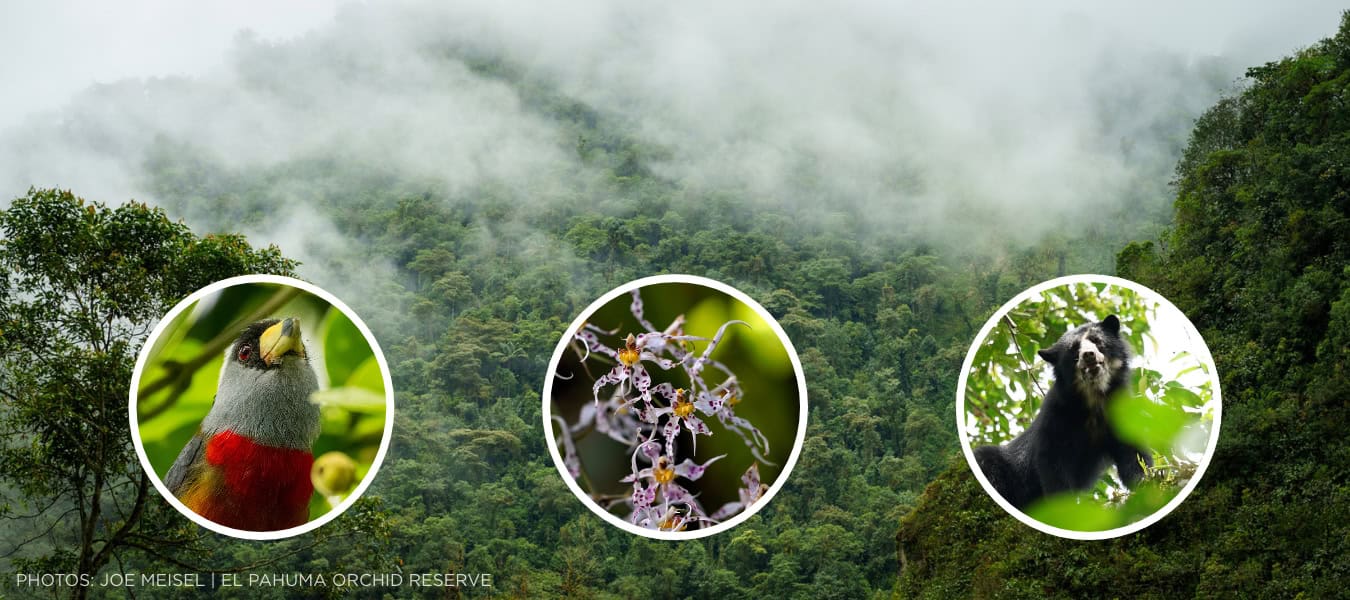
Spectacled bear (Tremarctos ornatus) | Photo: Joe Meisel
Conserving wild places demands a long-term commitment: learning the landscape, building trust, and adapting as conditions change.
In 1998, Joe Meisel and I pulled off a mountain road in Ecuador, drawn into the misty cloud forest by a towering waterfall. On the trail, we met landowner Efraín Lima, who proudly showed us orchids he’d rescued and replanted. “Do you think tourists would pay to see my orchids?” he asked. Days later, surrounded by four generations of his family, we agreed to help them shift from logging to ecotourism, launching Ceiba’s very first project via a landmark 25-year conservation easement. Today we face another pivotal moment: Efraín passed away last year, just as our easement reached its term. His children remain deeply devoted to this forest, but as they age, their needs have evolved. To secure their family’s future while honoring their father’s legacy, they have decided to sell half the reserve—and they want Ceiba to buy it.

While the forest endures, it currently lacks legal safeguards. El Pahuma’s spectacled bears, rare orchids, and endemic species remain vulnerable to deforestation and mining. Purchasing this land allows Ceiba to register it into Ecuador’s National System of Protected Areas for permanent legal defense, while continuing to co-manage the reserve alongside the Limas.
Many of you have supported El Pahuma since its inception. Now, we ask you to help us take the ultimate step toward fulfilling the Lima family’s dream: permanent protection for this pristine gem.
 Yours,
Catherine Woodward, PhD
President
PS: What aspects of Ceiba’s work are most important to YOU? We’d love to know!
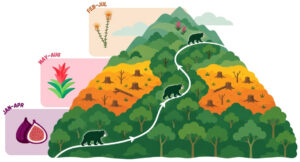
Spectacled bears, denizens of Andean cloud forests, are uniquely tropical: they climb trees skillfully and adore fruits and bromeliads (pineapple-like plants). Because mountain fruits ripen at different times and elevations, bears travel from deep valleys to high ridgelines in search of their next meal. In the Andes, deforestation turns these vital migrations deadly: vehicle collisions and retaliatory killings from crop-raiding are the top causes of death for these bashful bears. That’s why corridors that connect large protected forests are so crucial. El Pahuma Orchid Reserve is just such a corridor, spanning over 2,100 feet in elevation, and linking two key protected areas in northwest Ecuador. Bears migrate through El Pahuma’s ~1000 acres of forest, along with toucan barbets (front cover), plate-billed mountain toucans, and other endemic species that must span elevations to survive. Ceiba is building on our longstanding partnership with the Lima family, owners of El Pahuma, to pursue a shared dream of protecting this forest forever.
Kinkajou (Potos flavus) | Photo: Joe Meisel
When the rains come, Ecuador’s seemingly barren coastal forest erupts. Leaves unfurl, seeds sprout, and birdsong heard nowhere else on Earth fills the canopy. Climate change is disrupting this seasonal rhythm, forcing animals like monkeys and kinkajous (above) to travel further to find food. But movement is difficult; deforestation of this threatened habitat – only 2% remains – has left plants and animals trapped in isolated patches.
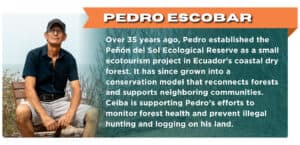
The dream of a conservation corridor that would reconnect these patches, helping wildlife and communities alike adapt as conditions shift, led us to establishing the Conservation and Sustainable Use Area (ACUS) in 2019. This year, Ceiba signed agreements with three landowners within the ACUS, protecting another 1,540 acres of forest, to turn their conservation visions into reality: Samuel Cevallos installed a solar watering system to keep his cattle out of the river, Verónica Fernández is planting trees and reducing fire risk, and Pedro Escobar is using trailcams to monitor wildlife and control hunting in his ecotourism reserve. The impact of these partnerships reaches beyond individual landowners by creating a network of connected lands that help people and nature remain resilient, even in the face of climate change.
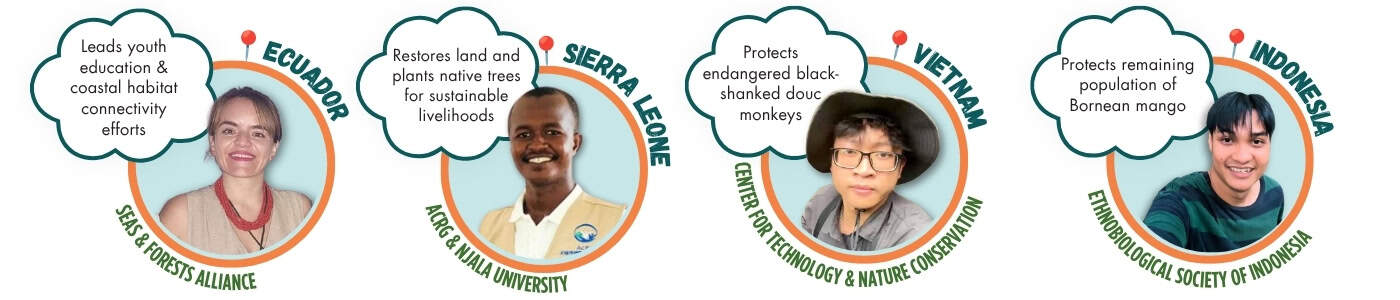
Meet one of the champions making his vision a reality…
Across the tropics, local conservationists are dreaming big and turning visions into action. But even the most promising ideas need funding to take flight. That’s where our Seeds of Sustainability (SoS) Fund comes in. Last year, we supported 6 grassroots organizations and achieved:
🌱 25,000+ trees and mangroves planted
🐘 50 km elephant corridor protected
👧 245+ youth engaged
👥 2,500+ community members engaged
Today, our network has grown to 14 organizations across 11 tropical countries, doubling our impact from the past year! Our newest partners are protecting pangolins in Benin, studying macaws in Colombia, safeguarding elephant corridors in India, and so much more…
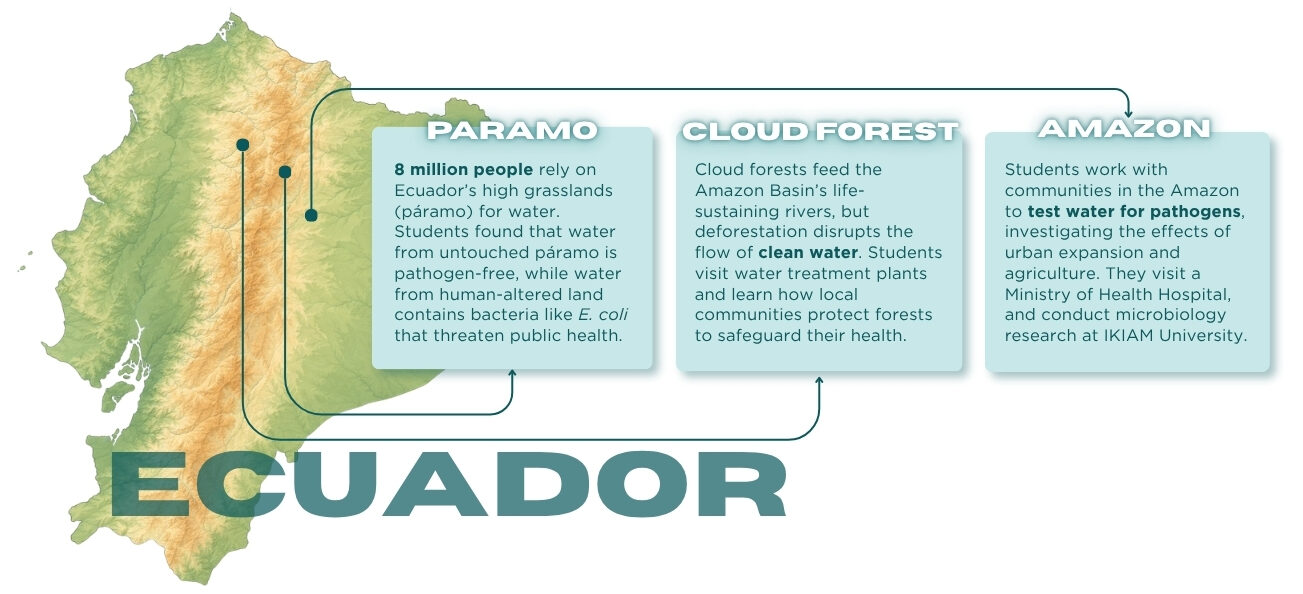
Water for Life students interview community members in Ecuador’s Amazon to investigate the connections between land use, water quality, and public health
Clean water is essential to healthy communities, and it starts with healthy ecosystems. Through Ceiba’s study abroad course, Water for Life, students explore how land use affects water quality and human health in communities across Ecuador. Follow their journey from the Andes to the Amazon to see how protecting ecosystems helps protect the people who depend on them…
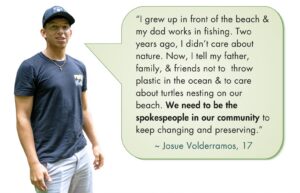
Protecting nature starts with understanding it. Through Discovering Ecosystems, youth in coastal Ecuador discovered the rich marine life just off their own shores. Thanks to donated transportation and equipment, students earned SCUBA certifications and put their new skills to use on a diving adventure in Puerto López, inspiring them to become advocates for marine conservation.
DEIDRE JAEGER | TROPICAL SEMESTER ABROAD, 2011
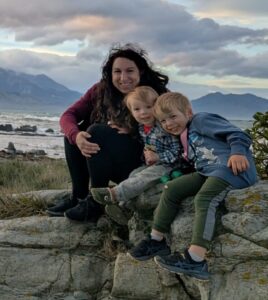 Deidre’s research internship with Ceiba focused on sustainable agroforestry with rural women in Ecuador’s Camarones community. That project evolved into her senior thesis and inspired her career studying socio-ecological systems. Now a postdoctoral fellow with Bioprotection Aotearoa at Lincoln University in New Zealand, her research centers on preventing plant invasions and developing collaborative strategies to protect New Zealand’s biodiversity, food systems, and cultural heritage.
The story behind our newsletter's name
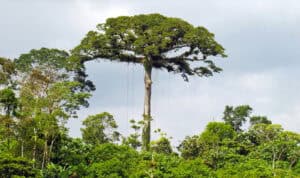
Kapok is the Malay name of the Ceiba tree, Ceiba pentandra. The seeds of the Ceiba, or silk cotton tree, are embedded in a silky fluff known as kapok, packed inside a large pod. When the pod splits open, the fibers carry the seeds away on the wind. We named our newsletter Kapok to represent the “spreading of seeds” of information, and the love of nature.