

Water quality is rapidly emerging as one the most pressing environmental concerns facing humanity in the 21st century, and the cross-cutting importance of clean fresh water supplies is emphasized in global initiatives on conservation, development, health, and economics. This 2-week summer service learning course in Ecuador highlights the interconnections between human use of water resources and health. The course caters to students in the Global Health certificate program, biological science, public health majors, or pre-med students who seek international experience in water quality issues. Students from any university are welcome to apply! Students will study the influence of land management practices on water quality, participate in community-based water quality monitoring, and learn about the epidemiology of water-borne pathogens that impact human health in rural communities.
From waterfalls in the Andes to beaches on the western coast this course shows you some of the best and most beautiful places Ecuador has to offer.
The program begins and ends in Quito, Ecuador, where we will spend a few days exploring the urban water supply and the natural mountain ecosystems high in the Andes that provision them. The group will have accommodations at a hotel during this time. From Quito, you will descend the eastern flanks of the Andes by bus, stopping along the way to hike in a cloud forest, before arriving in Tena, a town near the Amazon River abounding with wildlife where you’ll stay until your return to Quito.
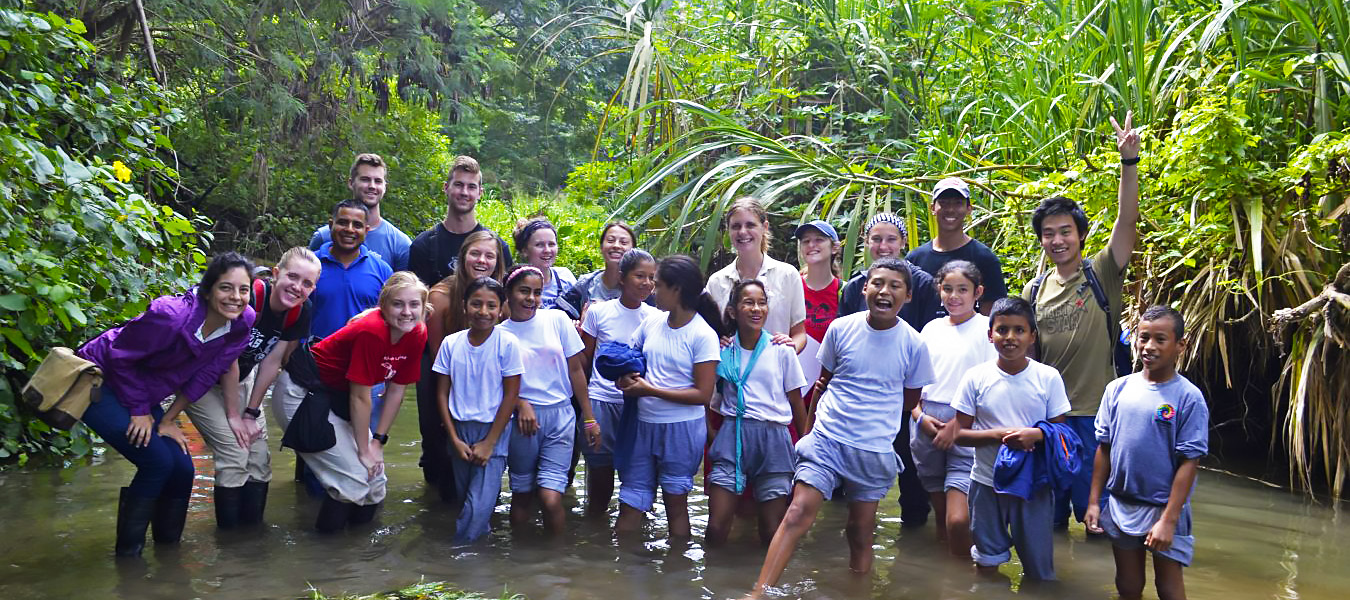
The group will work on local water testing, river clean-ups, and education programs. Visits to local water treatment facilities and health clinics, provide students with ample opportunity to learn about the tropical environment, and get to know the local culture and people.
Join the local citizen-scientists as you dive into field work and service learning within the community.
This program will involve hands-on field work and service-learning in the community, combined with lectures, training in field and laboratory water analyses, and discussions presented in local context. Ecuador’s diverse water sources provide an ideal location for study of the linkages between land use, water quality and human health. You will earn two credits of Inter-Ag and Nutritional Sciences 421 at UW-Madison for this course.
The first week of the course will focus on understanding the global water supply and human impacts upon it. In the field, we’ll compare urban and rural access to potable water and sanitation, explore the natural ecosystems that provision freshwater, and talk with community members about local land use practices from a water quality and sustainability standpoint.
During the second week, you will focus on water-related health risks. You will join community “citizen scientists” to test local water supplies for disease-causing micro-organisms, and discuss strategies for keeping water supplies safe. You will visit a local hospital and speak to health care professionals about their perspectives on managing water-related health problems. Finally, you will carry out your own field research on a topic related to water quality.
Frequent group discussions and journaling will provide ample opportunity for continuous reflection on your experience.
Mauricio Lascano, Professor
Dr. Lascano is an Ecuadorian biologist with a doctorate from Ohio University, specializing in Microbiology, Tropical Diseases, and Global Health. He completed post-doctoral training at the CDC’s Center for Global Health and focuses his research on the biology and epidemiology of tropical infectious diseases.
Bas Andrade, Co-Instructor
Bas studied a bachelor’s degree in biology at Universidad San Francisco de Quito, where they began focusing on aquatic invertebrate taxonomy and ecology. They have worked on numerous projects in the university’s aquatic ecology lab, one of which resulted in co-authoring the book Los ríos de las cuencas Andino-Amazónicas.
Raina Chinitz, Operations and Engagement Manager
Applying could not be simpler, just submit online forms to Ceiba and the University of Wisconsin. Need to plan your summer sooner? Ceiba offers provisional early acceptance to qualified candidates.
Deadline: Apply by March 6 for the 2026 summer course.
2026 Program Cost: Once in Ecuador, virtually all your expenses are covered including meals, hotels and transportation to program locations around the country. Here is a breakdown of the costs:
Note that tuition does not include international airfare. We don’t arrange a group flight, preferring to let you decide whether to come early or stay late, and take a bit more time to explore South America! The fees shown are for Wisconsin residents who apply through UW-Madison. Please see the UW-Madison program page for more details on costs and out of state resident fees.
Arranging credit through another institution or don’t need credit? Please contact us!
How To Apply: Applying is a simple two-step process! First, fill out Ceiba’s online application form below. Then, go to the University of Wisconsin-Madison program page to fill out their application and upload your transcript.
Early Acceptance: You are welcome to submit your application before the formal deadline and request an early review (contact courses). Ceiba issues provisional early acceptances to strong candidates, which virtually guarantees you a spot in the program as long as you meet University of Wisconsin-Madison eligibility requirements. See the UW Study Abroad program page for more detail.
Financial Aid: Participants in Ceiba programs are eligible for any financial aid and scholarships offered by the University of Wisconsin or other sources to support your college studies; please contact Larissa Yankovich (yankovich@wisc.edu) and Lindsay Heiser Barger (lindsay.heiser@wisc.edu) to explore a wide range of available options.