


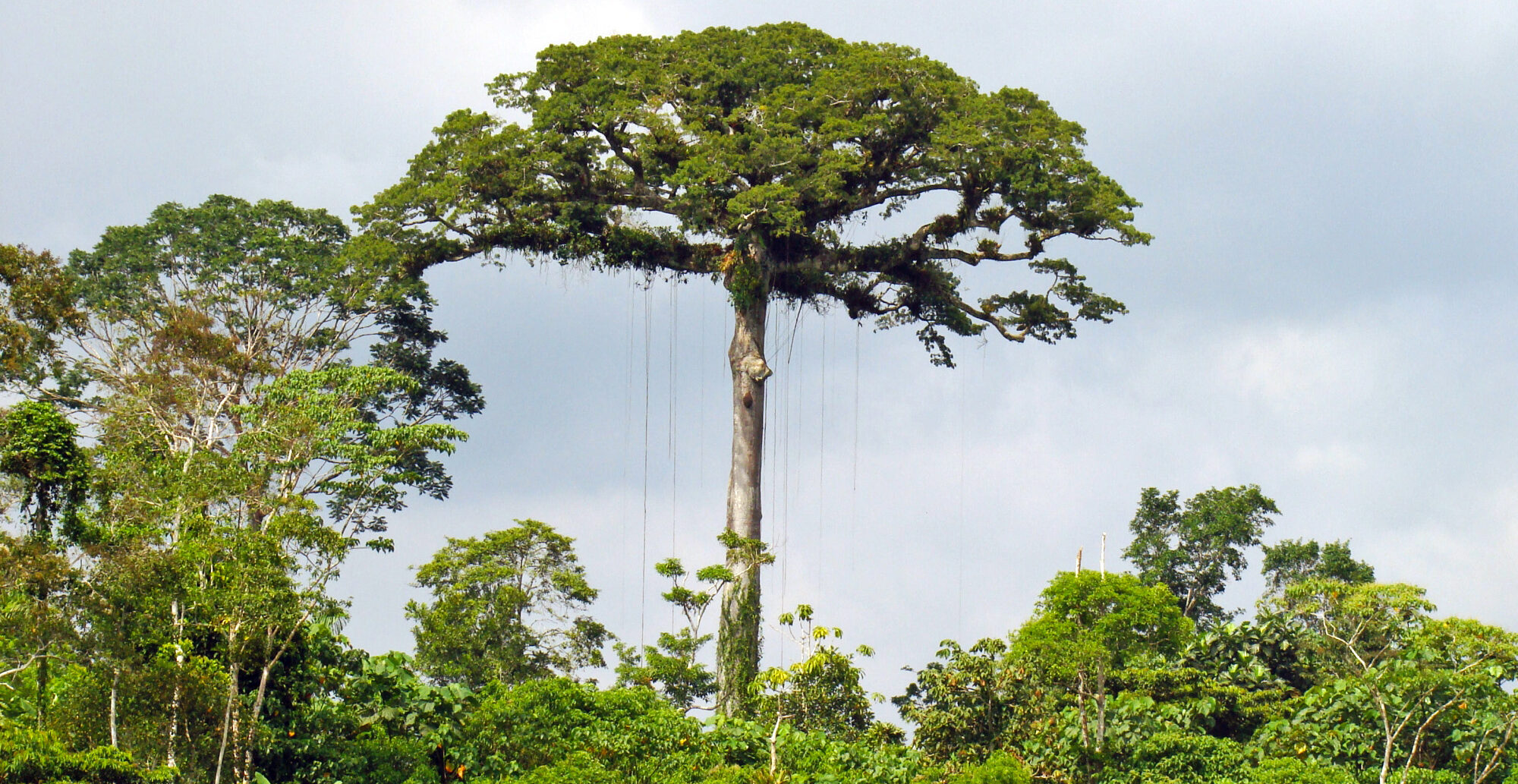
Ceiba derives its name from Ceiba pentandra, a majestic tropical tree revered for its towering stature and beautiful form. Also known as the kapok or silk cotton tree, Ceiba trees are present throughout the tropics and symbolize the complex biological interactions and human connections with the environment that underscore our work.
The Ceiba tree was sacred to the Maya people of Central America, who believed the lofty tree carried human spirits to the heavens. The long thick vines hanging down from its spreading limbs provided a connection to the heavens for the souls that ascended them.
The giant limbs of the Ceiba’s umbrella-shaped crown are laden with vines and epiphytes (aerial plants) and provide home to countless species. Birds feed and nest in the tree’s high perches, mammals use the enormous limbs as aerial highways, frogs raise tadpoles in the tiny pools that collect in bromeliads, and insects reach the peak of their diversity in the canopy.
The huge flowers of the Ceiba tree are bat pollinated, but the name kapok (KAY-pok) refers to the fluffy waterproof fibers that surround the seed. These fibers are used to stuff mattresses and life preservers, and biologically to aid in seed dispersal.
Click here for more information.